


Miguel Bandy is a Texas funeral service professional whose background spans funeral home management, funeral directing, embalming support, staff training, compliance oversight, and family service. Since joining Lincoln Funeral Home and Memorial Parks in 2024 as funeral home manager and funeral director in charge, he has overseen operations that include marketing, budgeting, licensing, education, and monthly performance reviews. Earlier roles at Dignity Memorial and Crawford-Bowers Funeral Homes, along with recognition within the Service Corporation International network, reflect broad practical experience in funeral operations. He studied political science and public policy at Eastern Illinois University and later earned an applied science degree from the Dallas Institute of Funeral Service. That combination of administrative and technical experience makes his professional profile relevant to discussions of how embalming is carried out in modern funeral care.
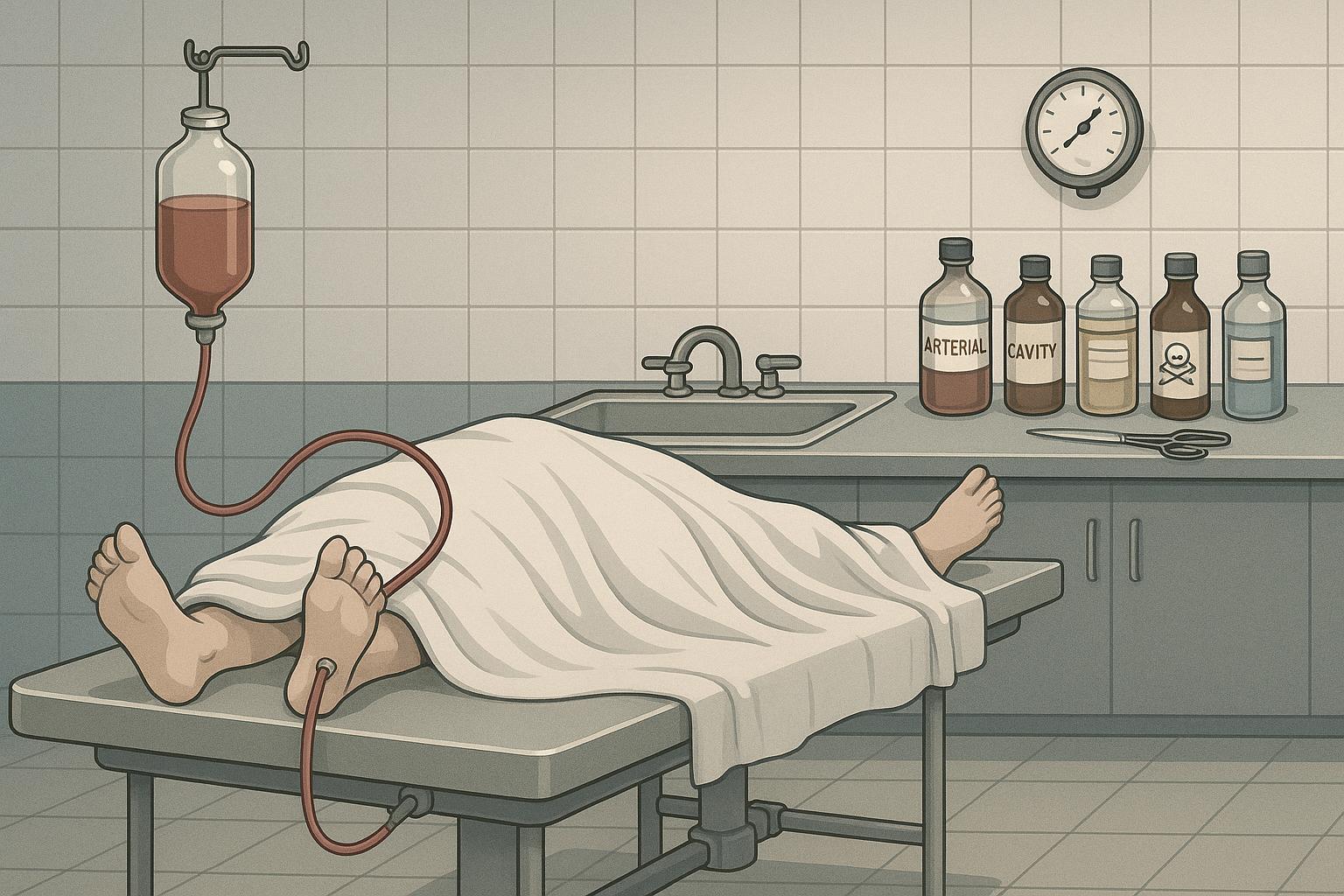
The modern embalming process involves preserving a deceased person’s body by removing blood and bodily fluids and replacing them with specially formulated chemicals that slow decomposition. This process is often chosen to help the individual appear more natural and at peace during public viewings, allowing family and friends to say their final goodbyes. Embalming may also be used for long-distance transportation or for medical and scientific purposes. Its main goals include sanitizing and disinfecting the body, improving its appearance, and preserving it for a brief period. Skilled embalmers can restore facial features and minimize visible signs of illness or injury, helping create a more comforting memory for loved ones. Embalming delays natural decay, giving families more time to plan funeral services while helping the body remain presentable.
Preparation for the embalming process begins by gently removing clothing and any medical items, such as bandages or IV lines. The body is then thoroughly cleansed using a disinfectant solution. Because stiffness from rigor mortis may have set in, the embalmer carefully massages the limbs and works the joints to restore flexibility. Facial hair is gently shaved to create a smooth appearance, while any beard or mustache the person had in life is respectfully maintained.
To create a calm and natural appearance, the embalmer carefully positions the facial features. The eyes are gently closed and secured with a mild adhesive, or small, flesh-toned eye caps are placed beneath the eyelids to help them stay in place. The mouth is then closed by securing the lower jaw, either with sutures or a discreet wiring technique. Once the jaw is stabilized, the lips can be arranged to form a relaxed, peaceful expression that reflects how the person appeared in life.
Once the facial features are set, the process moves to preserving the body internally, also known as arterial embalming. This phase involves introducing a preservative solution into the body through the arteries while blood is simultaneously drained through the veins. This fluid, a mixture of water and specialized chemicals, circulates throughout the body to slow decomposition and maintain tissue condition. The process continues until the preservative solution has fully replaced the blood, ensuring the body is properly preserved.
After the circulatory system has been treated, attention shifts to the internal organs. Also known as cavity embalming, this stage focuses on preserving the internal organs and removing any remaining fluids or gases. Using a specialized instrument, the embalmer carefully accesses the torso to draw out contents from organs such as the stomach and lungs. A stronger preservative solution is then introduced into the body cavity to prevent further decomposition. Once complete, the small entry point is sealed. Additional precautions may be taken to prevent leakage, ensuring the body remains clean and well-preserved.
If an autopsy has been performed, cavity embalming is usually not required because the internal organs have already been removed and examined by a pathologist. These organs may be preserved using chemical solutions, returned to the body, or kept for further study. If they are returned, they are placed in sealed plastic bags before being repositioned inside the body, which is then carefully closed. In some cases, the organs may be placed in a bag and kept alongside the body, such as at the foot of the casket, rather than inside the body cavity. If the organs are not returned, materials like cotton may be used to restore the body’s form before it is closed. Once all necessary steps are complete, the body is washed again, dressed in the chosen clothing, and placed in the casket, ready for viewing and final services.
The length of time a body remains preserved after embalming depends on several factors, including the embalming chemicals, environmental conditions, and storage conditions. In most cases, embalming can preserve a body for several days to a few weeks, giving families enough time to plan a viewing or funeral service. The process works by using formaldehyde-based solutions to slow down natural decomposition, but it is not a permanent method of preservation. For extended periods, additional measures such as refrigeration are often required. Some families may also consider alternatives that avoid chemical use, such as direct cremation or whole-body donation, which still provide meaningful ways to honor a loved one.
Although alternative funeral options have become more common, embalming continues to play an important role in modern funeral services. Families often choose it to support open-casket viewings, allow more time for arrangements, or follow specific cultural or religious traditions. By slowing natural decomposition, embalming helps maintain the body’s appearance for services held several days after death. At the same time, its necessity is increasingly being reconsidered, as some individuals explore options such as whole-body donation for medical research and education. This alternative allows families to honor their loved ones while contributing to scientific progress and avoiding certain funeral costs. The funeral director can guide families through these decisions, balancing technical expertise with compassionate support to ensure each choice aligns with practical needs and personal wishes.
About Miguel Bandy
Miguel A. Bandy is a funeral home manager and funeral director in charge with Lincoln Funeral Home and Memorial Parks in Dallas. His experience includes business operations, staff education, marketing, compliance, and occasional embalming services. He previously worked with Dignity Memorial and Crawford-Bowers Funeral Homes and was recognized in 2007 among top regional funeral directors within the Service Corporation International network. He studied at Eastern Illinois University and the Dallas Institute of Funeral Service.