


Dr. Damon Deteso is a diagnostic radiologist with Millennium Medical Imaging in Saratoga Springs, New York, where he specializes in CT, MRI, nuclear medicine, X-ray, and ultrasound imaging. In addition to his clinical responsibilities, he has explored the role of artificial intelligence in radiology and remains active in the American College of Radiology through ongoing conference participation and professional development. Dr. Deteso completed his medical education at the University of Massachusetts Medical School, followed by advanced training through Harvard Medical School, Tufts University School of Medicine, and the University of California San Francisco. Outside of medicine, he enjoys skiing, basketball, astronomy, music, and travel. Given his longtime interest in skiing and physical wellness, Dr. Damon Deteso recognizes the importance of understanding common ski injuries and practical ways individuals can reduce their risk while enjoying the sport.
Tips for Minimizing Injury Risk While Skiing
Skiing is a popular outdoor activity in the United States. Close to 10 million Americans combine for about 65 million ski visits each year. Those who participate in skiing enjoy various mental and physical health benefits, including improved cardiovascular performance. However, skiing also presents certain injury risks. Skiers should familiarize themselves with common injuries so that they can take steps to mitigate them.
Knee problems represent by far the greatest risk, accounting for approximately half of all ski injuries. ACL and MCL tears are common, as are meniscus injuries to the knee. Skiers also experience shoulder injuries, including sprains and dislocations. Collisions or falls can lead to serious head injuries, such as concussions, underscoring the importance of wearing a properly fitted ski helmet. Furthermore, skiers may experience hand and wrist injuries, including “skier’s thumb.”
Skier’s thumb is a colloquial term for a UCL tear. The UCL is a ligament in the thumb that can tear when a skier falls while holding onto their pole, which contacts the joint on impact in such a way that the UCL stretches or tears. In some cases, skiers feel no pain immediately after the injury, but they may notice bruising, redness, or swelling around the thumb and index finger. Even with no pain, they might struggle to grasp their ski pole and other items or feel like the joint is loose.
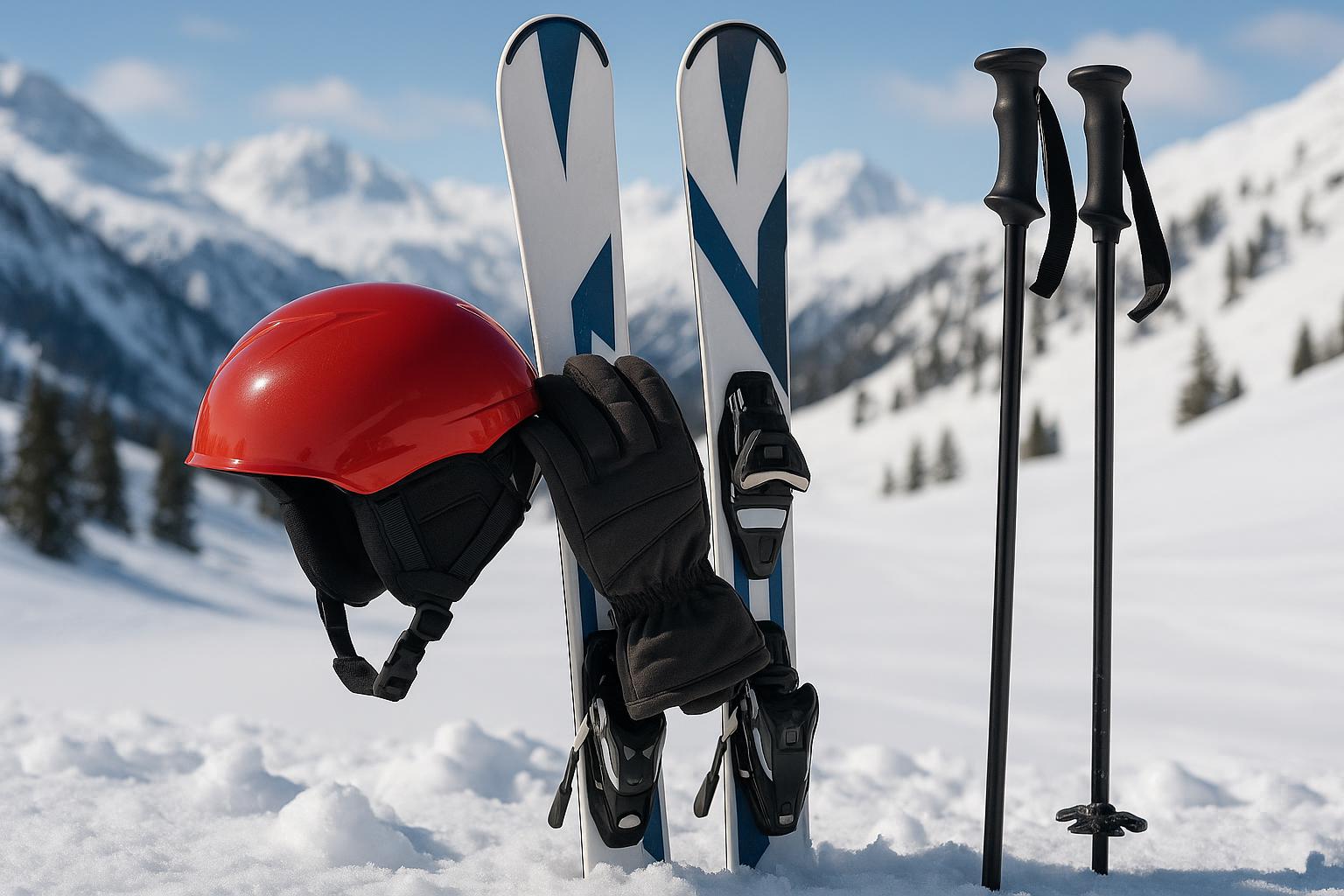
Minor UCL injuries only require a period of limited movement for recovery, though skiers may need to wear a cast or splint to stabilize the joint. More severe tears may need surgery. With skier’s thumb in mind, individuals should remember two important safety tips. First, once skiers are prepared to begin a run, they should loop their pole straps around their wrists. Next, if a skier begins a fall, they should immediately let go of their poles. Releasing the poles reduces the risk of hand injuries, like skier’s thumb, while the loops prevent the poles from flying away, potentially causing a hazard further down the trail.
Skiers must also monitor for wear-and-tear injuries over time. The repetitive movement of skiing, such as crouching, can lead to tendinopathy, tendonitis, and other inflammation-based conditions. Individuals who feel pain or discomfort in their knees or other parts of the body while skiing should take a few days off and, if the issues persist, consult with a medical professional.
Skiers can mitigate their injury risk by adhering to a few elements of ski safety and etiquette. The National Ski Areas Association (NSAA) maintains a Responsibility Code to help skiers understand their obligations to others while sharing the trail. Perhaps most importantly, the Code implores skiers to always travel at a speed and in such a manner that allows them to stop or change direction at any moment. The American Orthopaedic Society for Sports Medicine notes that skiers struggle to maintain control as they lose energy, so individuals should call it a day as soon as they feel fatigue. Skiers can further reduce injury risk by dressing appropriately, following all trail signs, and avoiding runs beyond their abilities, such as double black diamond trails.
About Damon Deteso
Dr. Damon Deteso is a diagnostic radiologist with Millennium Medical Imaging, PC, in Saratoga Springs, New York. He has served in the role since 2004 and has also worked as a medical advisor with Imagen Technologies. Dr. Deteso completed medical training through the University of Massachusetts Medical School, Harvard Medical School affiliates, Tufts University School of Medicine, and the University of California San Francisco. His professional interests include radiology research, emerging imaging technologies, and artificial intelligence applications in medicine.