


Paul Generale is a healthcare executive whose career has been shaped by a commitment to advancing patient access and organizational excellence within large healthcare systems. As the executive vice president and chief strategy and network officer of CHRISTUS Health, a nonprofit system with over 350 facilities and more than $6 billion in assets, Paul Generale has held leadership roles including chief operating and financial officer, interim CFO, and senior vice president of financial operations. Holding business administration degrees from Baylor University and the University of Houston, Clear Lake, he is a fellow of the American College of Health Care Executives and has been named among the Top 150 Healthcare CFOs in America. His career reflects a sustained focus on improving healthcare access, quality, and financial stewardship.
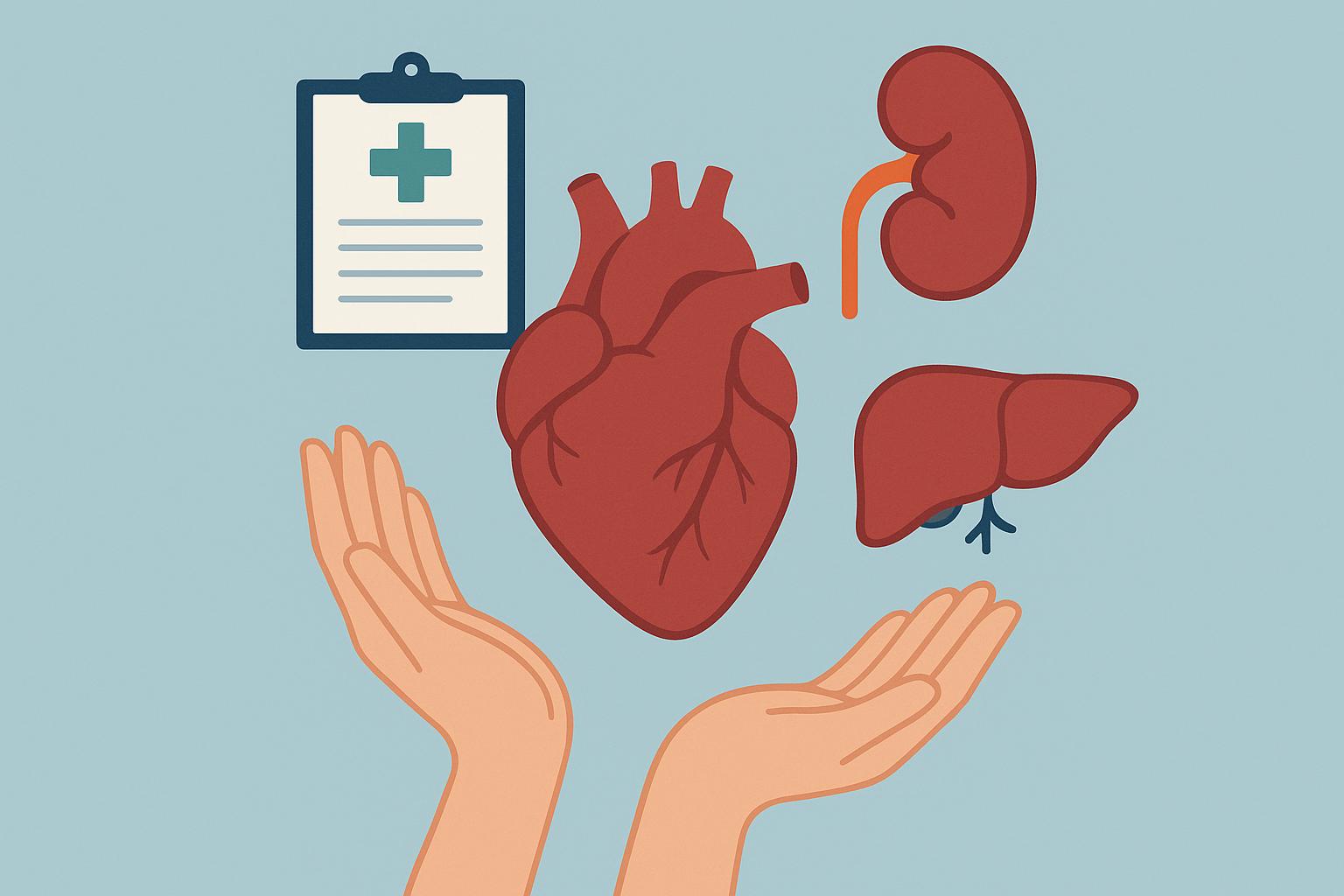
Organ donation is the surgical process of recovering an organ from one person (the donor) and placing it into another (the recipient) whose own organ is failing. A wide variety of organs can be transplanted, including the heart, lungs, kidneys, liver, pancreas, intestines, and uterus.
Beyond organs, essential tissues can also be donated, such as corneas, skin, heart valves, bones, veins, and nerves. According to Donate Life America (DLA), the national transplant waiting list currently exceeds 100,000 individuals in the United States, with an overwhelming 86 percent of those patients waiting for a kidney.
The allocation process is managed by a national network that matches available donor organs with compatible recipients. This matching system evaluates objective medical criteria, including blood type, tissue compatibility, body size, geographic distance between donor and recipient, medical urgency, and time spent on the waiting list. Factors like income, race, gender, celebrity status, or wealth are strictly excluded from consideration.
Once a match is confirmed, transplant teams notify the waiting patient, and the organ is respectfully recovered and transported to the designated hospital. Because the demand for organs heavily outpaces the number of available donors, DLA reports that roughly 5,600 people lose their lives annually while waiting for a transplant.
However, a single individual has the power to make a massive impact — one donor can save up to eight lives, restore sight to two people through corneal donation, and heal more than 75 others through tissue donation.
Organ donation generally falls into two categories — deceased donation and living donation. Deceased donation is the most frequent method, occurring when an individual’s organs are recovered after their passing to save the life of someone in critical need.
For deceased organ donation to be viable, the individual typically must pass away in a hospital setting, usually while on a ventilator in an intensive care unit. This medical support keeps oxygen flowing to vital organs, maintaining their health for future transplantation.
Tissue donation follows a different timeline — because tissues are more resilient, the donor doesn’t need to die in a hospital, and tissues can be successfully recovered up to 24 hours after death.
Living donation occurs when a healthy individual chooses to give a kidney or a segment of their liver to someone else. A common scenario involves a relative or close friend stepping forward to donate a kidney to a loved one facing advanced kidney disease. This is possible because a person can sustain a completely normal, healthy life with just one functional kidney.
Living donors are vital to the transplant community. By stepping forward, they provide an alternative pathway for candidates, significantly cutting down their time on the organ waiting list and ultimately giving recipients a better chance at long-term survival.
To be cleared for a living donation, a candidate must be at least 18 years old, legally capable of giving informed consent, and fully educated on the risks of the procedure. Living donation requires major surgery, and it carries inherent risks, such as infection at the surgical site, blood clots, the possible need for blood transfusions, and in rare instances, death.
Consequently, potential donors must undergo rigorous screening to ensure they’re in excellent physical health to minimize the risk of surgical complications and in a stable mental state to make an informed, independent decision.
For those interested in becoming organ donors, registration is simple. Individuals can sign up when applying for or renewing their driver’s license, or register online through the Donate Life registry.
About Paul Generale
Paul Generale is a senior executive at CHRISTUS Health, a Dallas, Texas-based nonprofit health system with over 350 facilities and more than $6 billion in assets. Serving as executive vice president and chief strategy and network officer, he oversees acquisitions, new business ventures, and risk finance management. He began his career at CHRISTUS Health as chief operating and financial officer of CHRISTUS St. John Hospital and has held progressively senior roles across the organization. He earned business administration degrees from Baylor University and the University of Houston, Clear Lake.