

Landing enterprise customers almost always comes down to a single hurdle of proving your security capabilities. For most B2B and SaaS startups, that proof is a Service Organization Control (SOC) 2 report.
Yet getting audit-ready from scratch can easily turn into a chaotic scramble of spreadsheets, screenshots, and guesswork. That unfortunate and confusing process has made compliance automation platforms indispensable. But selecting the right solution isn’t just about finding automated tests. It is about understanding what the tech actually solves, where it stops, and how to build a program that survives growth.
Here is how to evaluate modern SOC 2 software before your first audit window opens.
What SOC 2 Software Does (and Doesn’t) Do
Before evaluating vendors, it helps to understand what automation actually delivers.
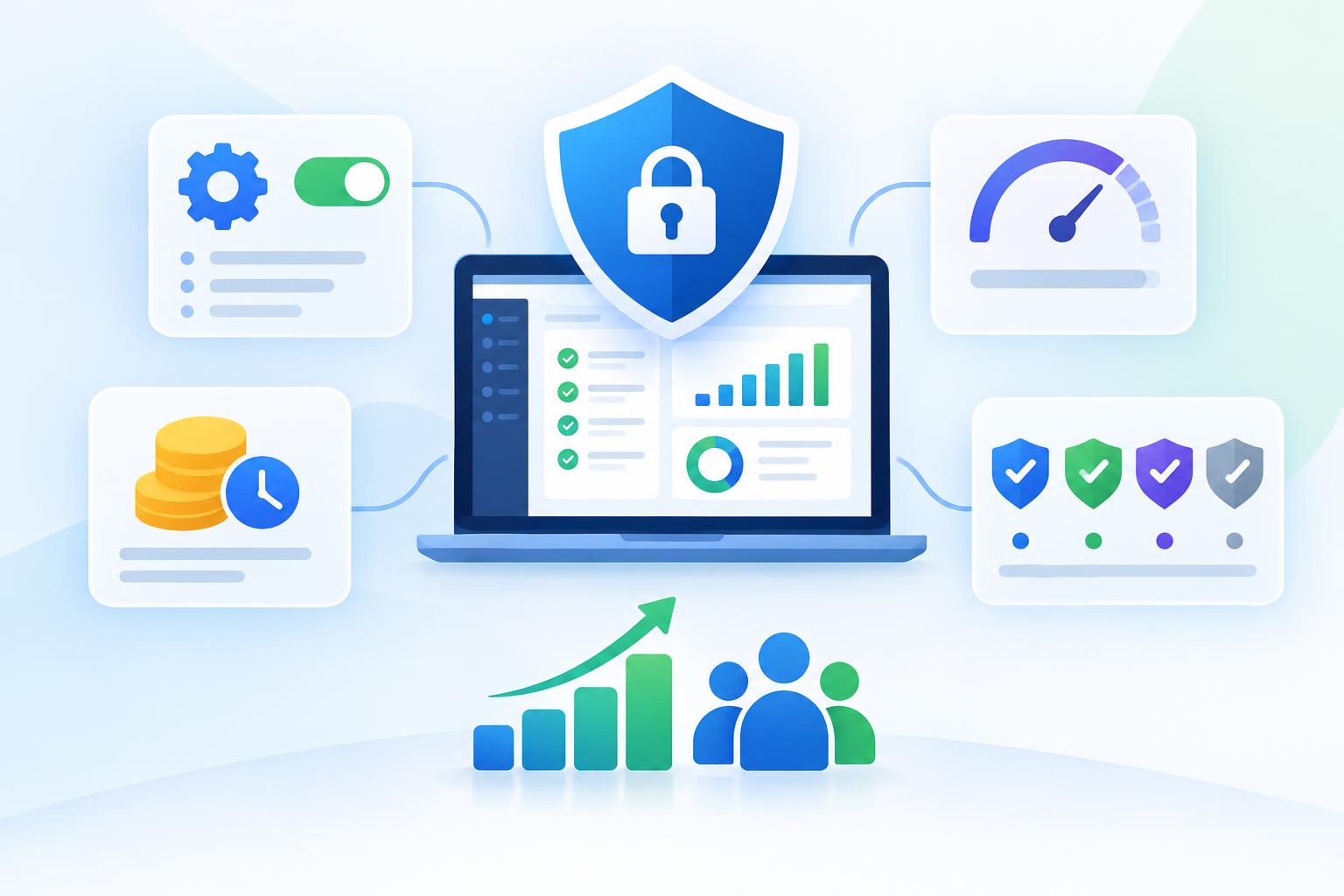
A solid compliance platform maps your security controls to the American Institute of Certified Public Accountants (AICPA) Trust Services Criteria, connects with your cloud services to pull evidence automatically, and also organizes operational workflows like policy acceptance and security training.
What it cannot do is issue your final report, as SOC 2 reports can only be issued by an independent, licensed CPA firm. The software builds the engine and collects the records while an independent auditor evaluates whether it actually works.
Core Features Worth Comparing
Not every automation platform is built with the same operational depth. When comparing different platforms for your organization, look closely at these foundational capabilities:
- Ecosystem Integrations: Look beyond surface-level cloud provider hooks (AWS, GCP, Azure). Robust tools integrate deeply across identity providers, HR systems, developer tooling (e.g., GitHub, GitLab), and ticketing workflows to continuously pull evidence without manual exports.
- Continuous Control Monitoring: Point-in-time checks are no longer enough. Your platform should continuously monitor your infrastructure, flagging security misconfigurations and evidence gaps before an auditor spots them.
- Practical Policy Management: Boilerplate policies fail audits when they don’t reflect your real workflows. Look for adaptable policy templates alongside automated employee distribution and tracking.
- Direct Auditor Access: The platform should offer an auditor portal or read-only reporting dashboard, letting external assessors review mapped evidence and policies directly instead of passing zip files back and forth.
- Type I and Type II Support: Your tools should support you whether you are pursuing a point-in-time Type I report or transitioning into a long-term Type II observation window, carrying forward controls without starting over.
Where Software Alone Falls Short
Automation accelerates evidence collection, but code alone cannot make subjective governance decisions. Software cannot determine your audit scope, decide which optional Trust Services Criteria to include (such as Availability or Confidentiality), tailor nuanced operational policies, or defend your program architecture during auditor interviews.
If your team lacks a dedicated in-house CISO or security lead, software-only solutions often leave engineers stuck interpreting ambiguous auditor requests. Look for platforms that pair software with credentialed advisory support, like security advisors who guide scoping, run mock reviews, and keep policies grounded in your operational reality.
Budgeting Time and True Costs
Compliance involves two separate budget line items: software licensing and CPA firm audit fees. Timelines also require practical expectations. While a Type I audit assesses control design at a single point in time, enterprise buyers typically demand a Type II report. Type II audits evaluate the operational effectiveness of your controls across an observation window (typically spanning 3 to 12 months).
If a major customer contract hinges on a Type II report, you must account for this monitoring period well in advance.
Planning Beyond Your First Framework
SOC 2 is rarely the last framework a scaling company faces. As you expand into healthcare, global enterprise markets, or defence supply chains, you may quickly face ISO 27001, HIPAA, CMMC, or Canada’s CPCSC.
Rebuilding your documentation for every new standard wastes hundreds of engineering hours. Choose software built around unified control mapping. When your platform maps shared security controls across multiple standards, evidence captured for your initial SOC 2 audit can be repurposed directly for other frameworks, saving your team from audit fatigue down the road.